Sports Photographer Melbourne: Editing On the Fly at Events
There are moments at a match that resolve in a fraction of a second, and then there are images that take minutes to make look right. If you shoot live sport in Melbourne, you learn to close that gap. Editing on the fly is a craft all its own, a mix of technical shortcuts, visual taste, and the ability to translate raw emotion into a finished file while the crowd is still buzzing. For clients who want immediate delivery — social channels, newspapers, sponsors — you need speed without sacrificing quality. I have worked dozens of gigs in Melbourne — community rugby, VFL fixtures, school swimming finals, corporate cricket — and the techniques below reflect what actually survives real pressure.
Why this matters Fast turnaround changes how a match is experienced. A well-edited image hitting social feeds within minutes can drive ticket sales for tomorrow, amplify a sponsor message, and shape a player's career highlight. Poorly processed images, even if well composed, erode trust. Being a sports photographer Melbourne clients call back means mastering on-location editing so images look intentional the moment they appear.
Choosing hardware that survives the heat Editing at a stadium requires different equipment choices than a studio. I carry two laptops. One is a lightweight Chromebook or tablet I use for flagging and quick uploads. The other is a workhorse laptop for raw conversion and finishing. For heavy lifting you want a machine with at least 16 gigabytes of RAM, an SSD with 1 terabyte or more, and a dedicated GPU if you process in Lightroom with GPU acceleration. Battery life matters. Matches in Melbourne can run late or be delayed by weather. A small, high-capacity power bank and a convivial relationship with event organisers for access to a power socket will save you.
Camera bodies and cards matter as much as compute. I prefer a pair of bodies that cover complementary needs — one crop-sensor for reach and burst rate, one full-frame for colour and low light. Bring enough UHS-II cards to avoid swapping under pressure. If you shoot with older gear, compensate with tighter control during processing, because older sensors often need more noise reduction and highlight recovery.
A short checklist before you arrive
- Two formatted memory cards per camera, labeled by body; spare cards in a waterproof case.
- Laptop with current catalogue, battery, and power adapter; card reader compatible with your card speeds.
- A small tripod or monopod for stability during long events, a lens cloth, and a compact LED light for tethered work.
- Client contact details, delivery specs, and a brief plan for which images they need first.
- A backup hard drive or cloud account ready for immediate backup.
Setup and network realities at Melbourne venues Connectivity varies wildly across Melbourne venues. MCG and Marvel Stadium offer robust media Wi-Fi inside restricted areas, but suburban fields and school venues can be a dead zone. Plan for both scenarios. When reliable Wi-Fi exists, I run a two-pronged approach: tether in-camera for near-instant transfer to the laptop, and simultaneously export web-sized JPEGs to a phone for social posting. If no network is available, flagging and pre-processing remain crucial. I cull and batch-export JPEGs during breaks, then upload as soon as I find a spot with signal.
Tethering choices depend on camera support and the match rhythm. USB-C tethering to a modern laptop is fast and stable, but it limits mobility. Wireless tethering tools are convenient for roaming but can be unreliable in dense venues. For matches where I need to move along the sideline, I use a wireless transmitter to a compact server in a media zone, which then syncs to my laptop when possible. That setup requires more gear and testing, but it pays off when clients expect a gallery during the third quarter.
The editing workflow that holds up under pressure Editing on the fly is about prioritizing. You will not have time to craft every image as you would in the studio, so pick a workflow that gives you consistent results fast. Mine looks like this: ingest, cull, batch-adjust, local tweaks as needed, export for delivery, backup. The key is intelligent defaults and a few repeatable local adjustments that match the venue and lighting conditions.
Ingest: Use a fast card reader and filename template that includes match, team, professional sports photographer Melbourne and sequence. Rename as you import — filenames with context save time later. I import into a pre-made catalog whose collections mirror common requests: hero shots, goal celebrations, bench reactions, sponsor signage. That way I can drop images into the right folder on the fly.
Cull: Scan for expression, peak action, and focus. Use keyboard shortcuts and a rating system. I typically aim to reject professional photographer Melbourne 70 to 80 percent of frames quickly. Tight culling matters because everything downstream depends on the handful of frames you choose.
Batch-adjust: Apply a baseline preset tuned for the venue. For Melbourne nights you often face mixed tungsten and floodlight temperatures, so my baseline increases clarity and adjusts white balance by a neutral finder tool. Expose toward the highlights; stadium lights clip in ways that are unrecoverable, so protect them first. Noise reduction at a mild level and a modest sharpening radius preserve detail without introducing artifacts when images are enlarged for prints or big-screen displays.
Local tweaks: Use local tools sparingly. A quick radial or linear mask on the player's face, dodging the whites of eyes, or a burn on shadowed jerseys will make a photo pop. These micro-tweaks differentiate a rushed image from one that feels finished. Resist the temptation to over-process; a clean, punchy colour grade works far better on mobile screens than aggressive filters.
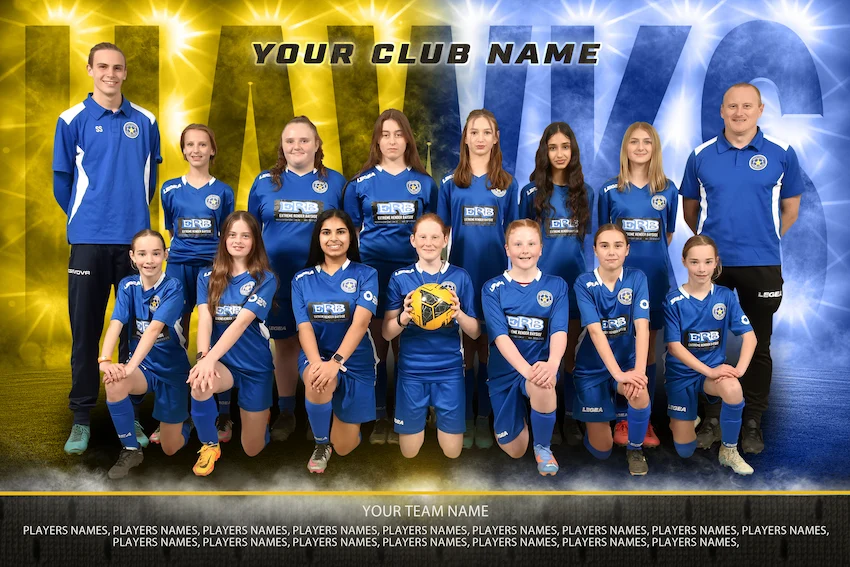
Export and deliver: Export sizes should match the destination. For social, export sRGB JPEGs at 1200 to 2048 pixels on the long edge, quality 75 to 85. For newswire or print, bump resolution and quality. Name files with clear identifiers, add IPTC metadata for rights and credits, and deliver via FTP, Dropbox, or the client's preferred system. For brands that require immediate posting, I text the top three images to the social manager and follow up with a zipped gallery.
Tools and presets that save minutes Presets are your best friend, but they are only as good as the conditions under which you created them. I maintain a small library of venue-specific presets for Melbourne arenas I shoot often. Each preset compensates for the typical tint and exposure shift I encounter there. Adjusting a preset by plus or minus one stop in exposure is often enough.
Layered edits in Lightroom or Capture One allow for non-destructive speed edits. Capture One tends to produce cleaner colours straight out of RAW for certain camera systems and offers powerful tethered workflows, while Lightroom is ubiquitous and fast for batch operations. Choose what you know fast, not what is theoretically better.
For rapid local corrections, I use a compact set of brush strokes and saved local masks. If I can draw the same mask quickly and reuse it, it becomes part of muscle memory. Noise reduction and sharpening are applied based on ISO bands. I created quick in-app profiles that switch automatically when a file registers ISO 800 versus ISO 3200, which avoids manual fiddling when the ball is flying and the light changes.
Managing client expectations in real time You will get asked for specific shots: the winning goal, the coach’s reaction, the sponsor holding a check. Have a short pre-match call or message with the client to clarify priorities. If they want a particular angle, assign a shooter to that task or plan a position change. On a recent suburban football final in Melbourne, the club wanted the trophy lift shot for the post-game social feed. I told them I would supply a sequence within five minutes of the final whistle. I set my camera to a higher burst mode, framed for the likely celebration zone, and processed the best frame immediately. Simple promises like that create trust.
Deal with tricky requests by explaining trade-offs. If a sponsor wants a full-resolution, heavily retouched portrait five minutes after the final siren, be candid about the time required and offer an interim image edited for colour and crop, followed by a finished version in 24 hours.
Handling lightning changes and lighting edge cases Melbourne weather can be fickle — cloud bursts, sudden wind, sunshine angles that change during the third quarter. Be prepared to adjust white balance presets and exposure strategies quickly. When the sun drops behind a cloud and the floodlights take over, you must switch noise and sharpening profiles immediately. If you rely on automatic white balance, monitor the colour cast as the light shifts.
If you shoot under mixed lighting, consider shooting in a raw profile that prioritizes highlight headroom. It is tempting to expose for midtones, but stadium lights burn highlights fast. Use your histogram liberally and rely on zebras or highlight warnings if available on your camera.
Anecdote: a wedding-day-level panic at a suburban venue Once at a midweek VFL match in Melbourne, a sudden storm interrupted play. The scoreboard and some peripheral lighting failed. I had one client demanding immediate content for a sponsor activation. I moved to a covered area, dusted off my waterproof laptop, and switched to a more aggressive noise reduction preset. The result was not studio-perfect, but it captured the mood — rain on the floodlights, players soaked and triumphant. The sponsor loved the authenticity. The lesson: You cannot control weather, but you can control how quickly your tools adapt.
Organizing files and rights when everything is moving File naming and IPTC metadata are not glamorous, but they are essential. Embed copyrights, contact details, and license terms at import. Use a consistent naming convention: match date, home team, away team, sequence number. When you outsource editing or hand off files to an agency like Pure Sport Images, metadata guarantees your work is credited and paid for.
Back up incrementally. As soon as you process a handful of key images, copy them to a backup drive or cloud folder. If a client asks for an image five minutes later and your primary drive locks up, you will be grateful for redundancy.
When to slow down: trade-offs you must accept Speed is valuable, but not at the cost of a signature shot. There are moments worth slowing for: a cross-field celebration, a decisive tackle, an athlete’s expression when the game is over. Schedule a few buffer minutes in your delivery promise for these images. Tell your client you will deliver a first wave in X minutes and a second, polished wave in Y hours. Most clients prefer that clarity over a rushed, mediocre gallery.
Balancing editing with storytelling Editing on the fly is not just technical. It is curatorial. A great set of images from a match shows the arc: the tension, the flashpoint, the aftermath. When you deliver, sequence images so the narrative reads visually. Lead with the hero shot, follow with context frames, then close on reactions and details. This sequencing matters more in social feeds and newsletters than a scatter of single images.
Branding and sponsorship considerations When shooting for commercial partners, capture clear exposure of logos and signage. Do this without being heavy-handed. A well-composed image with discreet branding supports sponsor needs and looks authentic. If a sponsor requires a specific frame, keep that in your priority folder so it can be processed first. For offers that come through agencies like Pure Sport Images, be sure you adhere to their delivery requirements for resolution and metadata.
Final thoughts on developing skill Editing on the fly is a skill developed through repetition and honest feedback. Review your work after each event. Note what presets worked, which local adjustments you reached for, and what you could automate next time. Over hundreds of games I learned that small improvements in culling speed and a handful of reliable presets saved hours of post-production. If you want to be the sports photographer Melbourne teams call when they need fast, reliable delivery, treat editing as part of your live kit, not an afterthought.
If you want help setting up a workflow tailored to a specific Melbourne venue, or a custom preset pack that matches your camera and favorite stadium, reach out. The faster you edit without compromising the story, the more valuable your work becomes on and off the field.
Pure Sport Images
23 Grandview Ave, Mulgrave VIC 3170, Australia
+61 413 157 614
[email protected]
Website: https://puresportimages.com.au/